Last updated: September 10, 2026
Key Takeaways
- Make sure it is free to move 6–12 inches, not tangled in sludge, roots, or debris.
- Verify whether water use has been unusually heavy in the last 24 hours.
- A running toilet or long laundry day can overload an otherwise healthy ATU for 12–24 hours.
- A basic homeowner check should take 10–20 minutes.
Table of Contents

- Who this applies to — and what it assumes you already know
- What does an aerobic septic alarm actually mean?
- What to check first, in order
- How do I tell if it is the blower, the pump, or a high-water float?
- When should I stop checking and call for service?
- The mistakes people make, and what they cost
- What about unusual systems, cold weather, or a recent power outage?
- How long should this take, and what counts as “okay for now”?
A flashing aerobic septic alarm is never just background noise. Treat it like a warning, because that is what it is. If you are unsure, consult a qualified septic professional. Start with the control panel, the breaker, the tank level, and whether the air pump or blower is actually running. The meaning changes with the light or horn, but the basic picture is the same: something in the treatment process has stopped, is overloaded, or has lost power. For background on aerobic treatment units, see EPA guidance on onsite wastewater systems and Texas A&M AgriLife Extension materials on ATUs. EPA Texas A&M AgriLife Extension
Who this applies to — and what it assumes you already know
This is for homeowners with an aerobic treatment unit, often called an ATU, and for property managers who already know where the control panel and breaker are. I am assuming you can spot the panel, know whether you have a blower or compressor, and read a float switch or alarm light if your system has one. Also, I am assuming you are not trying to repair the internal pump motor, replace wiring, or open the sealed electrical compartment on your own; if any of that is unclear, consult a septic professional.
This is a high-stakes household system. No drama, just reality. So the line between “check first” and “call for service” matters. You can safely do the basic checks: confirm power, listen for the blower, inspect visible alarms, and note whether toilets, tubs, or yard areas are backing up. You should not open anything that exposes live electrical parts, lift wet tank lids if you are unsure of the gas hazard, or ignore a high-water alarm that stays on after a simple reset. If sewage is surfacing, odors are strong, or the house is backing up, I would stop troubleshooting and get a qualified septic professional the same day.
The point is not to play technician. It is to narrow the issue enough to tell whether you are dealing with a power problem, a failed blower, a high-water condition, a float issue, or a missed service interval. That split can save a service call. But only if you keep the checks simple and write them down.
What does an aerobic septic alarm actually mean?

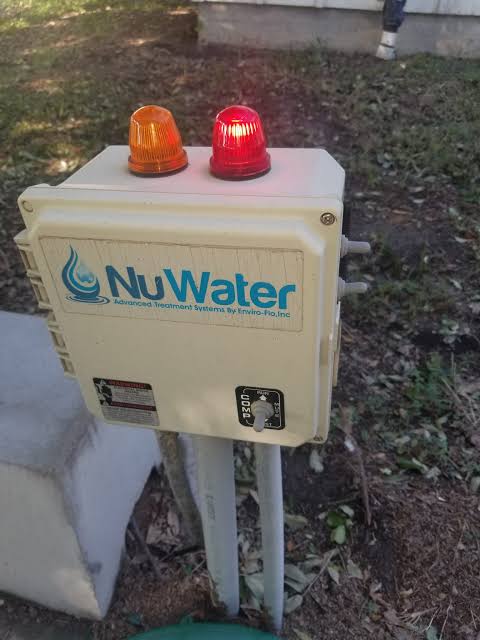
An aerobic septic alarm going off usually means the control panel has spotted a condition that keeps the unit from treating wastewater correctly, though the exact meaning depends on the brand and alarm type; if the label is unclear, consult a septic professional. In plain terms, the alarm is saying oxygenation, pumping, or liquid level is outside the normal range. On many ATUs, that warning appears as a horn, a red light, or both. Some panels also show separate indicators for high water, pump failure, or aerator failure. For general septic-system maintenance and warning signs, EPA resources and the National Onsite Wastewater Recycling Association both point homeowners toward prompt inspection rather than guessing. EPA NOWRA
“Aerobic” is the part that matters. Air keeps the treatment process alive. When a blower or compressor stops, the biology shifts quickly and treatment quality drops, so a septic professional should verify the cause if the alarm persists. A short outage may not become an emergency, but a blower failure can turn into a backup if the household keeps sending water into the system. A high-water alarm, by contrast, often means the tank is filling faster than the system can move water out, which can happen because of a failed pump, a stuck float switch, an electrical fault, or too much water entering the house.
The same alarm does not mean the same thing on every brand. Norweco, Aqua-Aire, and similar ATU setups use different panel layouts, and some systems separate the treatment tank alarm from the lift station alarm. So the first task is to identify which alarm you have, not to assume it is “just the septic.” If the panel has a label or diagram inside the cover, use that. If it does not, look for wording such as “high water,” “compressor,” “pump,” or “power.” Those clues usually point to the first branch of the problem.
A good rule: if the alarm is intermittent and the system is otherwise draining normally, you may be looking at a temporary power glitch or a float that hung up. If the alarm is steady and water use has caused slow drains or backups, assume a real fault until proven otherwise. Crystal-clear? Not always. But it is better than guessing.
What to check first, in order
Begin with the easiest checks and move toward the ones that need service. In many cases, that cuts the problem down in under 15 minutes.
- Check whether the alarm is silenced or active. Press the silence or acknowledge button only once, if your panel has one, and note whether the horn stops while the light stays on. Verify the panel label for “high water,” “pump,” or “blower.” If the alarm resets and returns within 1–2 minutes, that points to an ongoing fault, not a random chirp.
- Confirm household power to the system. Look at the dedicated breaker and any GFCI outlet feeding the blower. Verify that the breaker is fully on, not half-tripped. If the breaker trips again immediately, that is a problem that needs service, not repeated resetting.
- Listen for the blower or compressor. Stand near the aeration tank or equipment pad and listen for a steady hum. A working blower usually runs continuously or on a fixed cycle. If it is silent and the panel shows power, the blower, capacitor, timer, or wiring may have failed.
- Check the water level if your tank has a visible access point. The liquid should not be up at or above the alarm float level. If the level is high, note whether the inlet is still receiving water from the house. A rising level with no discharge suggests a pump or outlet issue.
- Inspect any exposed float switch or float tree for obstructions. Make sure it is free to move 6–12 inches, not tangled in sludge, roots, or debris. A float stuck in the up position can trigger a false high-water alarm even when the level is normal.
- Check for obvious plumbing overload inside the house. A running toilet, leaking softener discharge, or a stuck tub spigot can add hundreds of gallons over a day. Verify whether water use has been unusually heavy in the last 24 hours. If it has, the alarm may be telling you the system was flooded, not broken.
- Look for surfacing effluent, wet ground, or odors near the spray area or drainfield. If you see standing liquid or smell strong sewage, that is a sign the system is not dispersing treated water properly. This is more than an alarm problem; it is an operating failure.
- Record the exact panel behavior before calling for help. Note the time, which light is on, whether the horn is steady or intermittent, and whether the blower/pump runs. Those details help a technician diagnose the issue faster than “the alarm went off.”
What points to trouble right now? A breaker that trips immediately, no blower sound, a high liquid level, a float that will not move freely, or visible backup. What points to a smaller issue? A brief alarm that clears after a normal reset and does not return, with the system otherwise operating.
How do I tell if it is the blower, the pump, or a high-water float?
Match the alarm to what the system is doing. That is the trick. A blower problem often shows up as a silent aeration tank, a dead panel light for aeration, or a musty odor from the tank area. A pump problem often shows up as high water in the tank, a wet or backed-up low point in the house, or a control panel that alarms while the blower still runs. A high-water float problem often shows up when the level looks normal but the alarm keeps sounding because the float is stuck, tangled, or out of adjustment.
The pump and the blower do different jobs. The blower pushes air into the system so treatment stays aerobic. The pump moves treated or partially treated liquid out of the tank to the next stage. On some systems the two are separate; on others the panel controls a recirculation pump or a spray pump as well. So a one-size-fits-all answer usually leads people astray.
If you want a practical split, use this sequence: if there is no air sound and the panel indicates aeration failure, think blower first. If the tank is high and the rest of the system is silent, think pump or outlet first. If the tank level is normal but the alarm remains on, think float switch or control panel fault. If a power reset changes nothing, stop treating it as a simple nuisance.
The classic mistake is assuming “alarm = pump” and swapping the wrong part. Another one is blaming the float when the system has actually backed up because the pump stopped. I would only call a float problem “simple” when the liquid level and the float position clearly disagree. If both the float and the liquid level are high, the float may be doing its job and the system may be overloaded.
When should I stop checking and call for service?
Stop and call for service when the alarm points to a condition that can damage the system, contaminate the yard, or expose you to sewage or electrical hazard.
Breaker trips more than once: That means an electrical fault or a failing motor is likely present — stop resetting it and call a septic or electrical technician, because repeated resets can worsen damage.
Water is backing up into tubs, showers, or floor drains: That means the system is not accepting or moving flow — stop using water and get service the same day, because continued use can flood the tank or the house.
Effluent is surfacing in the yard or near the spray area: That means treated liquid is not dispersing correctly — keep people and pets away and arrange professional service, because surface exposure raises contamination risk.
Tank level is at or above the alarm float and will not drop: That means the pump, discharge line, or outlet path may be failing — stop adding water and call for repair, because the tank can overflow.
You smell strong sewage around the tank or pump area: That means gases or leakage may be present — do not open lids or enter enclosed spaces, and call a qualified septic professional, because septic gases are hazardous.
You cannot identify the panel label or the system type: That means you may be looking at the wrong component — stop guessing and get the system identified before any reset or part replacement, because the wrong action wastes time and can mask the real fault.
This is not the place for heroic DIY. If the alarm keeps returning after a breaker check and a visual inspection, the problem is already past the “quick homeowner fix” stage.
The mistakes people make, and what they cost
The most common mistake is silencing the alarm and walking away. That can buy you silence for a few hours while the tank keeps filling. Then the house pays for it. The consequence is a backup or surfacing effluent; the better move is to note the condition and check whether the alarm returns.
Another mistake is resetting the breaker over and over. That can damage a failing motor or compressor and may turn a repairable fault into a replacement. The better move is one reset, then observation. If it trips again, stop.
A third mistake is assuming a dry yard means the system is fine. Many failures happen inside the tank first. The consequence is delayed repair until the house has slow drains or backups. The correct alternative is to check the liquid level, not just the grass.
A fourth mistake is opening lids without knowing what is under them. That risks falls, exposure to gases, and contact with contaminated liquid. The correct alternative is to use only the access points you already know and can reach safely from outside the tank.
A fifth mistake is calling every alarm a “blown septic.” That phrase hides the real issue and wastes time. A high-water alarm, a blower alarm, and a float alarm are not the same problem. The correct alternative is to read the panel labels and record them before you call.
A sixth mistake is ignoring the household water load. A running toilet or long laundry day can overload an otherwise healthy ATU for 12–24 hours. The consequence is a false sense that the system “always does this.” The better alternative is to reduce water use immediately and see whether the alarm clears.
What about unusual systems, cold weather, or a recent power outage?
Change the usual check when the system has a pump chamber, a spray field, or freezing weather. In a pump-chamber setup, the alarm may belong to the lift station rather than the treatment tank, so the first clue is often the location of the wet well lid or the separate control box. In a spray system, overspray, frozen nozzles, or a clogged filter can trigger a high-water condition even when the blower is fine. In cold weather, a vent line, float, or discharge line can freeze for hours and mimic a mechanical failure.
After a power outage, a short alarm may be normal if the blower or pump is delayed on restart. I would watch for 30–60 minutes after power comes back, but not if the panel shows a persistent high-water condition or the breaker will not hold. If the system has a battery backup or generator transfer switch, check whether that circuit is actually alive. Some panels appear powered while the pump circuit itself is dead.
If the system has not been serviced in about 6 months, especially for filter cleaning or sludge removal, the alarm may be telling you the unit is overdue rather than broken. That does not make the alarm harmless. It means the right fix may be pumping, filter cleaning, or float inspection, depending on the design.
The main adjustment is simple: the more complex the system, the less likely one visual check will explain the alarm. On a standard gravity septic tank, you can sometimes narrow it quickly. On an aerobic unit with spray dispersal, separate pumps, and float controls, you often need the panel diagram and a technician’s meter. A bit messy? Sure. But that is how these systems work.
How long should this take, and what counts as “okay for now”?
A basic homeowner check should take 10–20 minutes. If the alarm clears after a breaker check, the blower runs normally, the tank level is normal, and there is no backup or surfacing liquid, that is the closest thing to “okay for now.” I would still keep an eye on it