Last updated: September 10, 2026
Key Takeaways
- A standard cleanout takes about 20 to 45 minutes when the issue is local.
- Wait 2 to 3 minutes for pressure to settle, then verify the spray has stopped completely.
- A good check takes about 15 minutes.
- Brush away grass, soil, and mulch for at least 6 inches around the base so debris does not fall into the opening.
Table of Contents

- Who this applies to — and what you need before you start
- Why the spray head clogs in the first place
- How do I clean a clogged aerobic septic spray head?
- What should I check before I blame the nozzle?
- When should I stop and call a septic service tech?
- What mistakes make the clog come back?
- What if the head is not the only problem?
A weak fan, a dribbling stream, or no spray at all usually points to one of three places: the nozzle, the filter feeding it, or the line leading to the head. Solids, biofilm, and mineral scale are the usual troublemakers in how fix aerobic septic spray head clogs. Short version: the system is pushing debris farther than it should.
Who this applies to — and what you need before you start
Homeowners with a spray distribution aerobic treatment unit are the audience here. Not a conventional septic drain field. If you are not sure which one you have, consult a professional or check your local permitting office and system manual before opening anything. That part matters.
I’m talking about the common setup with an aeration chamber, a clarification chamber, a pump tank, and a spray head or sprinkler at the discharge point. I’m also assuming you already know where the control panel is, can identify the spray head riser, and have access to the pump tank lid without digging blind. Basic stuff, but easy to get wrong.
Do the job yourself only when the clog is at the spray head or the last few feet of line. If the yard is flooding with dark water, the panel is alarming, the breaker keeps tripping, or the system smells like raw sewage instead of treated effluent, consult a professional. Why? Because the fault may be upstream, not in the nozzle.
In that case, a licensed aerobic system service provider or septic technician is the right move. The issue could be a failed pump, a broken float, a dead aerator, or solids carryover from the treatment tank. Not glamorous. Just expensive.
I would not treat this like a casual lawn sprinkler repair. Aerobic effluent can still carry pathogens, and a clogged spray head can be a symptom of a larger treatment failure, so consult a professional if anything looks beyond a local blockage. Keep children and pets away from the area. If you need to open a tank lid, stay clear of confined-space risks and do not reach into a tank.
For reference, the U.S. EPA’s Onsite Wastewater Treatment Systems guidance and many state septic programs treat spray dispersal as a managed wastewater function, not a landscaping fixture; consult a professional if you are not sure whether your system is operating within those rules. That matters, because the wrong “fix” can push untreated water where it does not belong. Ugly outcome.
Why the spray head clogs in the first place

Four usual suspects show up here: solids, slime, minerals, or mechanical damage. Slime means biofilm, the sticky bacterial coating that builds inside wet plumbing. In an aerobic system, that film can grow faster than people expect when aeration is weak, the unit is overloaded, or maintenance has slipped. And yes, that happens.
Solids from a failing clarifier can reach the pump tank and jam the nozzle. In hard-water areas, calcium and iron can narrow the orifice until the spray pattern collapses. Sometimes the head is not really clogged, either; the internal screen is packed, the nozzle is cracked, or the fan vanes have been chewed up by grit. Tiny details. Big mess.
A generic article often misses the big clue: where the spray pattern fails tells you what failed. A head that spits in one narrow stream usually has a blocked nozzle opening. A head that sputters and then stops can mean air in the line, a failing pump, or a float issue. A head that sprays but only partway across the yard often has partial mineral buildup or low pressure. And a head that clogs again after cleaning? That usually points upstream to solids carryover from the treatment tank or to a filter that is overdue for service. That math stops working fast.
The first thing I care about is not the brand name; it’s the condition of the effluent. Visible chunks larger than a few millimeters mean the system is not treating well enough for spray dispersal. Not a nozzle problem. A treatment problem. The nozzle is just where the symptom shows up.
Before you touch anything, shut off any irrigation controls if they’re tied into the same area, and note whether the panel shows an alarm or a pump fault. A standard cleanout takes about 20 to 45 minutes when the issue is local. If the clog returns within a day or two, stop thinking “spray head” and start thinking “system.” Clean once, diagnose twice.
How do I clean a clogged aerobic septic spray head?
Start by isolating the head, then remove it, flush the line, clear the screen and nozzle, and check that the spray pattern comes back as a full, even fan after reassembly. Order matters. Skip steps, and the clog usually returns. For how fix aerobic septic spray head clogs, this is the local-cleanout sequence that usually works when the rest of the system is healthy.
- Turn off the pump circuit at the breaker or disconnect. Wait 2 to 3 minutes for pressure to settle, then verify the spray has stopped completely. If water still pulses at the head, you have not isolated the pump, which means you should stop and find the correct disconnect before opening anything.
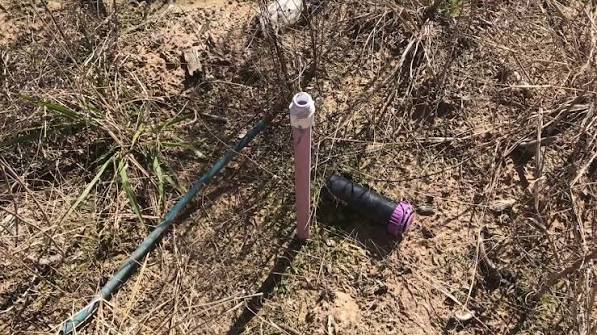
- Expose the spray head and clean around the riser. Brush away grass, soil, and mulch for at least 6 inches around the base so debris does not fall into the opening. Verify you can see the head body and any retaining collar. If the riser is cracked or crooked, the head may be damaged below grade.
- Unscrew the spray head carefully and note the parts order. Place the pieces on a clean towel in sequence: cap, screen, nozzle insert, gasket or O-ring, and body. Verify the gasket is intact and not flattened or split. If parts are fused with scale, do not force them with pliers that can crush the plastic.
- Rinse the nozzle and screen with clean water. Use a garden hose or a bucket of water to flush from the back side outward for 30 to 60 seconds. Verify that water passes through the orifice evenly. If it still restricts flow, you likely have mineral buildup or grit lodged in the opening.
- Soak mineral-coated parts in a mild descaling solution only if the manufacturer allows it. A white vinegar soak for 15 to 30 minutes is a cautious first step on light scale; stronger acids should be left to a qualified service tech. Verify the deposits soften and wipe away with a nylon brush. If the plastic turns cloudy, brittle, or deformed, stop using that part.
- Flush the supply line before reinstalling the head. Hold a bucket over the open riser or direct the line into a safe containment area and briefly energize the pump for 5 to 10 seconds if the system design allows controlled flushing. Verify a strong, clear surge of water with no grit, sludge, or black flecks. If discharge looks dirty or weak, the problem is upstream and cleaning the nozzle alone will not last.
- Reassemble the head with the correct orientation. Replace the gasket if it is swollen or cut, then tighten hand-tight plus a small additional turn, not with brute force. Verify the head sits upright and the nozzle opening points in the intended direction. If the body cross-threads or the spray angle is off, back up and realign it.
- Restore power and observe 2 to 3 full spray cycles. Watch for an even fan, a consistent throw, and a clean shutoff after the cycle. Verify the head does not drip continuously after shutdown. If it leaks, sputters, or misting replaces a full spray pattern, there may be a pump pressure issue or a partial blockage left in the line.
What you want is plain: a steady, even spray pattern with no dribble at the base and no visible debris in the discharge. If the head works for 1 day and then clogs again, that is not a cleaning failure; it is a diagnosis failure. Wrong part. Wrong answer.
What should I check before I blame the nozzle?
Check the filter, the pump, the float switches, and the tank condition before you assume the spray head itself is at fault. A lot of “clogged heads” are really dirty filters or a pump losing pressure.
Start with the effluent filter if your system has one. It sits in the pump tank or outlet path and catches suspended solids before they reach the spray line. Months without cleaning can choke flow enough to starve the head. Clean it per the system manual and verify that the discharge improves immediately. If you do not know where the filter is, that is a good line between homeowner work and service work.
Next, listen to the pump during a cycle. A healthy pump should come on, move water decisively, and shut off without stuttering. If the sound is labored, the breaker trips, or the pump runs but the head barely sprays, the issue could be a worn impeller, a blocked check valve, or low voltage. Those are not nozzle problems. A check valve that sticks closed or open can also make the spray irregular.
Then look at the tank and the float operation. The float switch is the device that tells the pump when to start and stop. If the float is hanging up, the pump may short-cycle, which means it turns on and off too fast to move effluent properly. That can leave solids sitting in the line. Verify that floats move freely and are not wrapped with grease, scum, or roots.
Finally, inspect the spray zone itself. If the soil around the head is saturated or the area smells stronger after a rain, the head may be spraying fine but the system is overloading the site. Different problem. Cleaning the nozzle will not solve it for long. A spray dispersal system depends on proper treatment upstream and adequate resting time for the spray area.
A good check takes about 15 minutes. If all of these look normal and the head is still weak, then the nozzle is the likely culprit. If more than one of them looks wrong, don’t waste time polishing the head while the system behind it is failing. That shortcut is a trap.
When should I stop and call a septic service tech?
Stop when the clog looks like a system fault instead of a local blockage. Here are the situations where cleaning the spray head is the wrong tool:
The pump won’t run or keeps tripping the breaker: This usually means an electrical fault, a seized pump, or a bad control component — stop resetting it and call a septic service tech or electrician familiar with wastewater pumps.
You see raw sewage, gray water, or large solids in the pump tank: That means the treatment stage is not doing enough separation — do not spray it, and get the system inspected before the next cycle.
The head clogs again within 24 to 72 hours: That points to upstream carryover, not a one-time nozzle blockage — clean the filter and have the tank, pump, and floats checked.
The spray pattern is gone across every head, not just one: That suggests a pressure or pump issue, not a single clogged nozzle — shut the system down and have the discharge side diagnosed.
You smell strong sewage near the spray area or the tank lid: That means the effluent is not adequately treated or contained — avoid prolonged exposure and have the system serviced.
The riser, head body, or line is cracked below grade: A leak can pull in dirt and roots, then re-clog the line repeatedly — replacement, not cleaning, is the fix.
Your local rules require licensed service for aerobic units: Some jurisdictions do, especially for alarms, pump repairs, or disposal settings — follow the permit conditions and schedule service rather than improvising.
That is the honest boundary: nozzle cleaning is a homeowner task only when the problem is truly local and the system is otherwise behaving normally. If you are guessing, you are probably already past the point where guessing helps. Better to stop.
What mistakes make the clog come back?
The biggest mistake is cleaning the visible tip and ignoring the filter. If the effluent filter is packed, the head will clog again fast, sometimes the same day. Clean the filter first, then the spray head, then confirm the line is clear.
A second mistake is forcing parts apart with pliers. That cracks plastic spray heads, flattens O-rings, and creates a leak path that collects grit. Hand pressure and patience usually beat brute force. If a part will not move, soak and inspect it instead of twisting harder.
A third mistake is using harsh chemicals without knowing the head material. Strong acids or solvents can damage ABS or PVC components and may create unsafe fumes. If you want to address mineral scale, start with a mild descaler that the manufacturer allows, or leave heavy scale to a service technician.
A fourth mistake is restarting the pump before the parts are seated. That can shoot the nozzle across the yard, flood the riser, or pull air into the line. After reassembly, verify the gasket sits flat and the head is hand-tight before restoring power.
A fifth mistake is treating repeat clogs as a landscaping issue. People cut back grass, mulch around the head, or dig out the spray zone when the actual problem is a failed aerator, a bad float, or excessive solids in the tank. The consequence is lost time and a messier site. The correct alternative is to diagnose the treatment train from tank to nozzle.
A sixth mistake is ignoring the season. In colder climates, a partially clogged head can freeze faster because the reduced flow leaves more water in the body. If winter weather is coming and the spray pattern is already weak, fix the restriction now or shut the system down in line with the local service guidance.
What if the head is not the only problem?
The standard fix changes when the system is under heavy solids load, has mineral-rich water, or uses a nonstandard spray head. In those cases, the nozzle still matters, but the cure is broader.
If the effluent is loaded with fine solids, the spray head is acting like a sieve for a treatment failure. That usually means the aeration chamber, clarification stage, or pump tank needs service. The practical answer is not a stronger cleaner; it is better solids control upstream. A service tech may check sludge accumulation, pump lift, and timer settings, depending on the system design.