Last updated: September 10, 2026
Key Takeaways
- A warm 95°F afternoon makes odors more noticeable and increases the discomfort of a failing spray system.
- Most emergency diagnostics take 30 to 90 minutes, and a straightforward repair can often be completed the same day if the part is on the truck.
- Before you book, ask a licensed septic professional whether they work on aerobic treatment units, not just conventional septic tanks.
- A better first response is often, “We need to diagnose the aerator, floats, and discharge path first,” even if that takes 45 minutes longer.
Call for aerobic septic emergency service the moment your system alarms, backs up, or stops aerating. Not after the weekend. In Austin, San Marcos, Kyle, Buda, and the Hill Country fringe, a failing aerobic unit can turn into sewage surfacing in the yard fast — especially after a heavy rain or a power blip. Three signs usually settle the question: an alarm that will not reset, wastewater backing into the home, or sprinklers that have gone silent and the tank smells wrong. Unsure? Consult a licensed septic professional and follow guidance from the Texas Commission on Environmental Quality (TCEQ): https://www.tceq.texas.gov/permitting/ossf.
When is an aerobic septic emergency, not a routine service call?

It becomes an emergency when the system can no longer treat or move wastewater safely for more than a few hours. That usually means one of three things: sewage is coming back into the house, the spray heads are discharging improperly, or the control panel is warning you about aeration, high water, or power loss and the problem does not clear after a quick reset. For a safer judgment on timing, consult a licensed septic professional; the EPA’s septic guidance also explains why untreated wastewater is a health risk: https://www.epa.gov/septic.
I would treat a backed-up aerobic system as urgent the same day in Travis County and Hays County because warm temperatures can make odor and contamination worse in as little as 12 to 24 hours. Clay-heavy Texas soil complicates things too; standing liquid tends to linger instead of soaking away. Ugly. If you can see graywater surfacing, or if toilets gurgle and drains slow at the same time, that is not a “watch it and see” situation. Waiting overnight is a gamble.
A routine service call is different. Normal visits cover filter cleaning, sprinkler adjustment, timer replacement, or a single pump issue caught before the tank overflows. Emergency service is for active failure, active backup, or a warning that points to failure right now. So if you are stuck choosing between Monday and tonight, I’d call tonight.
Who this is not for: the system is running normally and you are only trying to get a yearly inspection in before your Austin-area permit renewal, you do not need emergency service.
What are the warning signs I should not wait on?
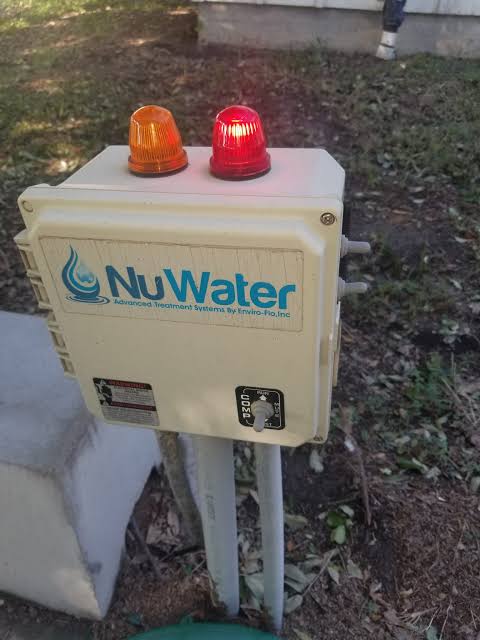
Do not wait if you see an alarm light, hear a high-pitched alarm, smell septic gas near the control panel, or notice soggy ground around the spray field within 10 to 15 minutes of a cycle. Those are the signs that tell me the system is not just “acting up”; it is failing in a way that can spread wastewater.
A few signs matter more than others in Central Texas. After a storm, an aerator motor can fail because of a breaker trip or a surge. After a dry spell, the spray area can look normal until a pump sends water to one section and the surface turns wet in seconds. If the aeration chamber is not working, the wastewater may look darker and smell stronger than usual. And if the disinfection stage is compromised, the spray pattern may still run, but it is no longer doing the job it was designed to do. Sneaky failure. That’s the trap.
Here is the short version I use for judgment:
- Call immediately if sewage is backing up into tubs, showers, or floor drains.
- Call the same day if the alarm is on and the reset does not hold.
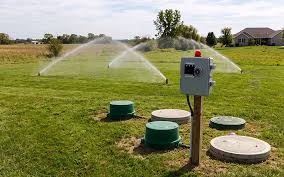
- Call within hours if spray heads are flooding, ponding, or misting poorly.
- Call fast if you lose power and the unit has been off long enough for the tank level to climb.
A septic emergency is also about what the system is near. In neighborhoods closer to creeks, drainage easements, or low spots around Dripping Springs and Wimberley, a failed aerobic unit can become a runoff problem more quickly than it would on higher, better-drained ground. So I would not delay.
How much does aerobic septic emergency service cost in the Austin area?

Emergency service usually costs more than a scheduled visit because it includes after-hours dispatch, diagnostic time, and, sometimes, temporary repairs or pumping. In the Austin metro, a reasonable planning range is about $150 to $350 for an emergency diagnostic call, with repair work often starting around $250 and moving upward depending on parts, access, and whether a pump, aerator, float switch, or control board needs replacement.
Here is a practical local cost table for planning only:
| Service in the Austin-area market | Typical local range |
|---|---|
| Emergency diagnostic visit | $150–$350 |
| After-hours or weekend surcharge | $75–$200 |
| Aerator motor replacement | $300–$900 |
| Effluent pump replacement | $350–$1,200 |
| Float switch replacement | $125–$275 |
| Control panel troubleshooting or repair | $150–$600 |
| Emergency pumping, if needed | $300–$700 |
| Filter cleaning / minor correction | $125–$250 |
Several things push the price up in Central Texas. Deep tanks, hard-to-access lids, and older systems with outdated components also take longer to service. If the problem started because the drain field is saturated after rain, the immediate fix may be temporary, not final; that changes both the bill and what comes next.
What I would not assume is that the cheapest quote is always the safest one. If a company promises a one-price fix before seeing the control panel, pump, and spray field, I would be careful. Aerobic systems have enough moving parts that “simple” failures can hide a second problem.
How long does emergency repair usually take?
Most emergency diagnostics take 30 to 90 minutes. A straightforward repair can often be completed the same day if the part is on the truck. If the aerator motor, pump, or control panel needs a replacement part that is not stocked locally, the temporary fix may happen first and the full repair may take 1 to 3 business days.
That timeline matters in Austin because heat changes the urgency. A warm 95°F afternoon makes odors more noticeable and increases the discomfort of a failing spray system. If the unit is serving a home with children, older adults, or a business property in places like Round Rock, Pflugerville, or Cedar Park, I would push for the fastest available response rather than waiting for a discounted slot.
Trade-offs are real. Emergency service can solve the immediate health risk, but it may not solve the root cause if the field is overloaded, the spray heads are clogged, or the electrical supply keeps tripping. A good repair visit often separates “make it safe now” from “fix it for the season.” That split is normal. Better than pretending one visit always covers everything.
Need a same-day answer? Ask two direct questions before booking: whether the company handles aerobic systems specifically, and whether it can send someone with diagnostic tools, floats, and common replacement parts. Those two questions save a lot of wasted hours. If the issue is not obvious, consult a licensed septic professional rather than guessing.
What usually goes wrong in Austin-area aerobic systems?
The most common failures are power loss, aerator failure, pump failure, clogged filters, stuck floats, and spray head problems. In the Austin area, I would also watch for storm-related power interruptions, soil saturation after heavy rain, and mineral buildup that can show up faster in some Hill Country water conditions.
A few failure modes are especially common in emergency calls:
- Aerator motor failure: The system may still look active at the surface, but treatment is dropping fast.
- Pump failure: Wastewater does not reach the spray field, so levels rise in the tank and alarms trip.
- Float switch failure: The panel may think the water is at the wrong level and shut the system down.
- Clogged filter: The system may back up even though the tank is not full.
- Spray head blockage or misalignment: You may see wet patches, poor distribution, or misting where it should not happen.
- Electrical issue: A breaker trip, surge, or loose connection can take the whole unit offline.
Texas permitting and maintenance rules matter here. Aerobic systems in the Austin area are generally regulated under state and local onsite wastewater rules, and many systems require regular inspection and maintenance by a licensed provider under Texas Commission on Environmental Quality oversight. If you are in Travis County, Hays County, or a nearby ETJ, do not assume a handyman can legally or correctly handle the fault. For rule language and permitting basics, I would start with the Texas Commission on Environmental Quality and local permitting offices, not a general plumbing page. The TCEQ onsite wastewater rules and the county development office are the places to check for current requirements.
A second source I would trust for the broader technical background is the U.S. EPA’s septic system guidance page: https://www.epa.gov/septic. It is not local code, but it helps explain why neglecting an aerobic system becomes a health problem, not just an inconvenience.
How do I choose the right emergency service in my area?
Choose a provider that works on aerobic units every day, can service your county, and can explain the likely failure in plain language. In Austin, Round Rock, Cedar Park, Buda, Kyle, Dripping Springs, Lago Vista, and nearby communities, I would want someone who can handle both the electrical side and the wastewater side, because the fix often crosses both.
A good first call should answer four things in under 5 minutes:
- Do you work on aerobic treatment units, not just conventional septic tanks?
- Can you dispatch same day or after hours?
- Do you handle alarms, pumps, aerators, floats, and spray heads?
- Are you licensed or otherwise authorized to work under Texas onsite wastewater rules?
I’d also ask for a real service window, not “sometime today.” On emergency calls, a 2-hour window beats a vague promise. If the answer sounds slippery, keep looking.
Who this is not for: a large field rebuild, a new spray area, or a permit-driven replacement means emergency service is only the first step. That is a separate project, and it may involve inspections, soil evaluation, and county approvals. A quick repair visit cannot erase a failed drain field.
Service-area note: the same kind of emergency response is often needed across South Austin, West Lake Hills, Lakeway, Buda, Kyle, San Marcos, New Braunfels, and the rural edges in between, especially where lots are larger and systems are farther from municipal sewer.
Red flags when the quote does not make sense
A quote should worry you if it ignores the control panel, skips the spray field, or promises a fixed repair without identifying the failed component. In aerobic septic work, the difference between a $150 switch and a $1,200 pump matters, and a quote that treats them the same is not careful enough.
These are the quotes that make me pause:
- “We can fix any aerobic problem for one flat price.”
- “No need to inspect the panel; we know what it is.”
- “The alarm doesn’t matter if the system still drains.”
- “You do not need a permit or licensed service for this.”
The first three ignore how these systems actually fail. The last one can put you in conflict with local rules, especially in counties around Austin where onsite wastewater oversight is taken seriously. I’d rather hear, “We need to diagnose the aerator, floats, and discharge path first,” even if that takes 45 minutes longer. If you are unsure, consult a licensed septic professional before approving work.
There is also a practical limitation worth saying out loud: some damage is seasonal and some is structural. If the yard is already saturated from a week of rain, the immediate repair may only keep the system safe until the ground dries. That is not a bad repair; it is an honest one.
FAQ: emergency, same-day, and free estimate questions
Can I wait until morning if the aerobic septic alarm is on?
If the alarm is on and the system is backing up, I would not wait. If the alarm is on but the system is otherwise stable, you may have a few hours, but same-day service is the safer call in Austin’s heat. When in doubt, consult a licensed septic professional.
Do I need same-day service for a bad smell only?
Not always, but I would treat a strong septic smell near the tank, panel, or spray area as urgent if it is paired with wet ground, alarms, or slow drains. Odor alone can be a venting issue, but it can also be the first sign of failure.
Will emergency service be more expensive on weekends?
Usually, yes. A weekend or after-hours visit often includes a surcharge, commonly in the $75–$200 range in the Austin market, though exact pricing depends on the provider and the problem.
Can I ask for a free estimate on an emergency call?
You can ask, but true emergency diagnostics are rarely free because someone has to respond, inspect, and isolate the fault. A phone ballpark is reasonable; an accurate estimate usually requires a site visit.
What if the system is on a maintenance contract?
Call anyway if there is an active backup, alarm, or spray-field failure. A maintenance agreement does not stop an emergency from being an emergency, and it may help you get faster service.
If you are in Austin or a nearby suburb and your aerobic system is alarming, backing up, or flooding the yard, the right move is to call now, not after the damage spreads.