Last updated: September 10, 2026
Key Takeaways
- A healthy aerobic system should not push out a strong sewage odor in normal operation.
- When it does, consult a licensed septic professional promptly rather than waiting.
- A sharp rotten-egg, sewer-gas, or septic odor is not normal.
- This is a job a careful homeowner can partly inspect, but not fully diagnose without the right equipment; if in doubt, call a pro.
Your aerobic septic spray head smells? That usually means the spray head is getting blamed for the wrong thing. More often, the real trouble sits in the water being sprayed, the plumbing that feeds it, or a treatment stage that has slipped out of balance. A healthy aerobic system should not push out a strong sewage odor in normal operation. When it does, consult a licensed septic professional promptly rather than waiting.
Table of Contents

- Who this applies to, and what I am assuming
- What the smell is telling you
- Why does my aerobic septic spray head smell?
- What I would check first, in order
- Common mistakes that make the smell worse
- When should I stop troubleshooting and call for service?
- What if the standard answer does not fit?
- FAQ
Who this applies to, and what I am assuming
This is for homeowners with an aerobic treatment unit that sends treated effluent through a spray head, sprinkler, or dispersal nozzle in the yard. I’m assuming you already know where the spray head sits, can open the access lids safely, and can tell a mild earthy smell from a true sewage odor. I’m also assuming you are not dealing with a full indoor backup or a flooded electrical compartment; those are different problems. Different beast.
A faint musty smell after a cycle can happen briefly, especially when the head sits in hot sun or the wind pushes odor back toward a patio. A sharp rotten-egg, sewer-gas, or septic odor is not normal. If the smell is strong enough that you notice it from the house, or if it hangs around for more than a day, I would stop treating it as a nuisance and start treating it as a fault in one of the system’s stages, with a septic professional if it does not clear quickly.
This is a job a careful homeowner can partly inspect, but not fully diagnose without the right equipment. Checking filters, spray patterns, tank levels, and obvious electrical failures is fair game. Opening control panels, pulling pumps, or entering any confined space is not. Aerobic units can hold toxic gases and energized parts. If you smell gas-like odors near a tank lid or suspect a pump or aerator failure, that is a call for a licensed septic professional, not a weekend experiment.
What the smell is telling you

Usually, a smell at the spray head means one of three things: the effluent is under-treated, the spray line is holding stale water, or the head is clogging and atomizing dirty liquid unevenly. In a properly functioning aerobic treatment unit, air is added to the wastewater so aerobic bacteria can reduce odor-causing compounds. When that step slips, the odor comes back fast.
The terms matter. “Effluent” means the liquid leaving the treatment tank. “Aerobic” means the system is using oxygen to support treatment. “Sludge” is the settled solids at the bottom of a tank. “Scum” is the floating layer of grease and lighter material. If either layer gets too thick, treatment quality drops and odor rises.
What does the smell itself tell you? A rotten-egg odor often points to anaerobic conditions, where oxygen is missing and sulfur compounds build up. A sour, septic, or foul pond-like smell can point to overloading, dead bacteria, or poor disinfection. If the odor is strongest only when the spray runs, the head may be atomizing water that is already bad. If the odor hangs around even when the system is idle, the trouble may be pooling, leakage, or soil saturation near the discharge area.
A generic “clean the nozzle” answer misses the point. A dirty nozzle can be the symptom, not the cause. I’d ask first whether the treatment train is producing acceptable effluent. If not, the head is only the messenger.
Why does my aerobic septic spray head smell?
The odor comes from untreated or partially treated effluent, trapped residue in the line, or a condition that lets odor-producing bacteria take over. So if the aerobic septic spray head smells, an upstream part has usually slipped first.
Weak aeration is the most common cause. Aerobic units rely on a working aerator or compressor to keep oxygen moving through the treatment chamber. If the air pump fails, the diffuser clogs, a timer is off, or the air lines leak, the system can drift toward anaerobic conditions in 24 to 48 hours. Then the water hits the spray head smelling far worse than it should.
A second cause is solids carryover. When sludge or scum escapes the tank, it can foul the spray nozzle, line, and check valve. The head then spits instead of atomizing cleanly, and the smell gets stronger because the droplets are larger and dirtier. This happens a lot when maintenance has gone too long between pump-outs or inspections.
Then there’s stagnant water in the spray line. If the line does not drain correctly, a short stretch can hold smelly water between cycles. The first burst smells awful, then the odor fades. That pattern often points to a bad check valve, a low spot in the pipe, or a partially blocked nozzle.
Hydraulic overloading is another culprit. Too much water from laundry, long showers, leaking fixtures, or stormwater intrusion can push the system beyond design flow. The treatment tank never gets enough dwell time, so odor passes through. If the smell gets worse after rain or on heavy laundry days, I would suspect overload or infiltration. The math stops working fast.
A fifth cause is poor disinfection, if your unit uses chlorine tablets or another disinfectant stage. Low disinfectant can leave more odor-causing organisms alive in the effluent. On systems that use tablets, a depleted feeder or bridging tablets can create a smell problem fast.
What I would check first, in order
Start with the easy checks and move toward the parts that require service. Don’t jump around. A smell problem usually makes more sense once you trace it from the discharge point back to the treatment unit.
- Stand upwind and identify when the smell happens. Check whether it smells only during spray cycles, only after rain, or all the time. Watch one full cycle to verify the timing; it is often only a few minutes. A smell only during spraying points to the nozzle, line, or effluent quality; a smell all the time points to pooling or a tank problem.
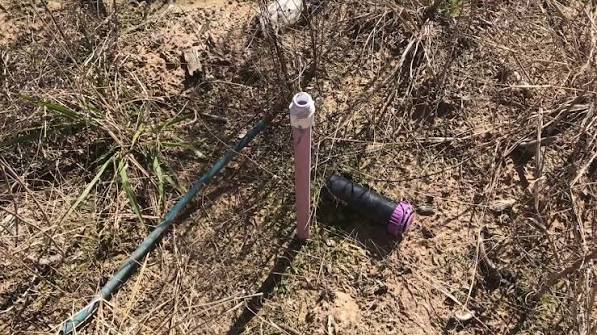
- Inspect the spray pattern from a safe distance. A healthy spray head should make a fine, even fan or mist. A good head throws a uniform pattern at roughly the same pressure the manufacturer specifies for that model, often around 20 to 40 psi on residential spray systems. A broken pattern, sputter, or puddling means blockage, low pressure, or wear.
- Check the nozzle opening for film, slime, or debris. Remove only the accessible cap or screen if the model is designed for homeowner cleaning. Rinse the part with clean water and put it back. Verify that the orifice is open and that the spray resumes evenly. If the head clogs again quickly, the problem is upstream solids or poor treatment, not just the nozzle.
- Look at the treatment tank levels. The liquid level should be where the system design expects it, not unusually high or low. A high level can mean a pump, float, or outlet problem. A low level can mean a leak or pump failure. If the level is above normal and the smell is strong, stop and call a septic professional.
- Check the aerator or air pump for obvious failure. You should hear or feel normal operation if the unit is designed that way. A silent compressor, alarm light, tripped breaker, or hot motor housing indicates trouble. Verify that the unit is receiving power and that any air filter is not clogged. No aeration means odor returns quickly.
- Inspect for standing water near the spray zone. The ground should not be soggy, blackened, or ponded after a cycle. If water sits on the surface, odor can linger and drift back to the head. Standing effluent is a sign of overspray, clogged soil, or a drainage problem.
- Check maintenance timing. If the tank has not been inspected in about 6 months, or if it has gone much longer than the local maintenance schedule, assume the system may be out of balance. Verify the last service date, sludge condition, and disinfectant supply if applicable. A neglected unit often smells before it fails outright.
- Note whether rain makes it worse. If the smell spikes after heavy rain, roof runoff, yard drainage, or a rising water table may be affecting the system. That points to infiltration or saturated soil, not just a bad head.
If you find only a dirty nozzle and the smell disappears after cleaning, that is a good sign. High tank levels, no aeration, or standing sewage? That’s not a nozzle job anymore.
Common mistakes that make the smell worse
First, do not spray cleaner or bleach into the nozzle. That can damage parts, upset the biology in the tank, and hide the real fault for a day or two. Better to clean the accessible head with water and fix the cause upstream.
Second, don’t assume a smell means the head itself is defective. A spray head is usually the last point in the chain. If the effluent is bad, a new head will smell too. Replacing the visible part before checking aeration, sludge, and discharge flow wastes money and time.
Third, avoid the “it’ll run it off” approach for a week. If the compressor is down or the check valve is stuck, the system does not self-correct. Odor usually gets stronger, and the nozzle can plug with residue. The right move is to inspect the failure point the same day you notice a strong sewage smell.
Fourth, never open tank lids without thinking about gas and power. Even short contact with a treatment tank can be dangerous if you are leaning over an open compartment. If a lid is heavy, broken, or set in a wet area, leave it alone and get help.
Fifth, ignore rainfall and surface water at your peril. Aerobic spray fields are sensitive to drainage. If gutters, downspouts, or grading send water toward the spray area, the system can smell worse after storms. Diverting runoff away from the spray zone is often more useful than cleaning the head a second time.
Sixth, don’t overclean the head with tools that enlarge the opening. A widened or damaged nozzle changes the spray pattern and can create drift, puddling, and odor. If the part is worn, replace it with the correct model rather than drilling, filing, or forcing it open.
When should I stop troubleshooting and call for service?
Stop and call for service when the smell points to a failed treatment stage, a power problem, or unsafe conditions around the tank. A spray head smell is often a symptom, not the fault itself.
The aerator or air pump is silent, hot, or tripping the breaker: this means the aerobic stage is not supplying oxygen — stop using excess water and arrange service, because the tank can turn anaerobic quickly and odor will worsen.
The tank level is high or rising: this means discharge is restricted or the pump is not moving effluent — stop heavy water use and call a septic technician, because backing up into the house is possible.
The spray area is ponded, black, or soggy for more than a few hours: this means the soil or drain zone is overloaded — keep people and pets off the area and get the system evaluated, because surface exposure is unsanitary.
You smell strong rotten-egg gas near the tank lid or control panel: this means dangerous gas or ventilation failure may be present — do not open lids further and get qualified help, because inhalation risk is real.
The alarm is on, or the control box shows a fault you cannot clear: this means the system is telling you it has a problem — note the code or light pattern and call service, because guessing can make the failure worse.
The odor persists after cleaning the nozzle and checking obvious drainage issues: this means the cause is upstream or internal — stop repeating the same cleanup and schedule inspection, because repeated clogging often signals sludge carryover or aeration failure.
A homeowner can usually do a visual check, clean an accessible nozzle, and note the symptoms. Anything involving floats, pumps, compressors, electrical panels, or tank internals belongs with a licensed septic pro. That is not me dodging the answer; that is me being honest about where the line sits.
What if the standard answer does not fit?
Standard advice changes when the odor pattern points to a different kind of failure. If the smell is only at startup, stale water in the line or a bad check valve is more likely than a treatment collapse. If the smell is strongest after rain, surface water intrusion or saturated soil moves to the top of the list. If the smell is present but the spray looks fine, the system may be producing partially treated water that still needs lab-style inspection or a service check.
Cold weather can change the picture too. In freezing conditions, a line can hold residue longer, and a spray head may atomize differently. If the head is icing, misting poorly, or spraying into freezing air, odor may linger near the discharge point without the tank itself being the main fault. In that case, the fix is often about timing, drainage, and exposed plumbing, not chemistry.
Some systems use disinfection tablets, and some do not. If yours does, a missing or bridged tablet feeder can cause odor without any obvious mechanical failure. If yours does not, do not waste time looking for a chlorinator problem that is not there.
Older systems, especially ones that have not been serviced on a 3- to 6-month schedule, often have multiple issues at once: weak aeration, sludge buildup, and a dirty head. When that happens, I would not chase the odor one piece at a time for weeks. A full inspection is faster and cheaper than repeated guessing.
FAQ
Can I just clean the spray head and be done?
Sometimes, yes, but only if the odor is caused by a clogged nozzle or stale water in the line. If the smell comes back within a day or two, the problem is usually upstream.
Is a little septic smell normal around an aerobic spray head?
A faint odor can happen briefly during spraying, especially in hot weather, but a strong sewage or rotten-egg smell is not something I would call normal.
Why does it smell worse after rain?
Rain often means runoff, infiltration, or saturated soil is affecting the system, and that can make an aerobic septic spray head smell worse until the ground dries out.